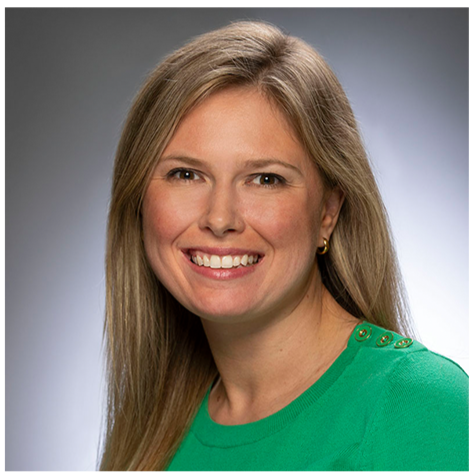
Today, get to know Mary Laphen Pope: Director of State Policy & Systems Change with HCM Strategists.
Mary Laphen Pope supports clients focused on change management to advance access and opportunities for today’s modern learners. Previously, Mary served as Strategy Officer for Access for Lumina Foundation, where she supported a portfolio focused on enrollment and reenrollment in community colleges, with specific attention to adult and rural learners. Prior to Lumina, Mary served at the Tennessee Higher Education Commission where she focused on college access and completion for traditional age students and adult learners, most recently as the inaugural Navigate Reconnect Director. In that role, Mary led a team to support the Tennessee Reconnect statewide initiative, which provides high-touch, wrap-around support to and through college to adult Tennesseans. Prior to her work with Tennessee, Mary worked at Franklin & Marshall College in Lancaster, Pennsylvania as a college adviser in the National College Advising Corps.
Mary holds an M.Ed. in higher education administration from Vanderbilt University and a B.A. in English from Gettysburg College. She resides in Pipersville, Pennsylvania with her family.
To learn more about Mary, please visit her LinkedIn.
We’re lucky to have a team with diverse lived experiences. Tell us about your background and how you found your way to this work.
→ I took a very traditional college path. I attended a four-year liberal arts college and majored in English while also earning my license to teach high school English. I was also a “traditional” student in the sense that I worked multiple jobs while enrolled, accumulated student debt, and studied a profession that I saw others find economic stability in.
This path led me to a tough job market that was not hiring high school English teachers and the need to quickly pivot to what I knew. I had spent a lot of time researching colleges for myself and working with high school students in college, so I joined the National College Advising Corps as a college advisor. That experience put a finer point on the systemic barriers that consistently sort students out rather than into higher education.
Upon finishing my term with the Advising Corps, I decided to invest in graduate school (and more loans) and have dedicated my entire career to two charges: 1) College needs to be an actual option for all who want it, not a theoretical possibility, and 2) Students are more than data points—in order to make actual change, we need to infuse humanity into the data.
HCM is dedicated to making educational systems more accessible, affordable, accountable, and equitable. What drives you to do this work?
→ I firmly believe that if postsecondary education is the “ticket to the middle class,” it should not be so hard to access and complete.
My parents did not attend college, but I went to a high school where many of my peers planned to and did. It was not a decision of “if” for them, it was “where.” I had a family member in my life who very much made sure it was a “where” for me too, but figuring out that “where” and “how” was incredibly difficult as a kid whose family didn’t have a college background. I was a motivated high school junior who spent hours researching colleges and applying to scholarships in between AP homework and after-school jobs. It still feels like a small miracle that I figured it out.
In this work, I think about the learners who deserve access to college and economic stability, but shouldn’t have to jump through hoops or hope for divine intervention to get there and succeed.
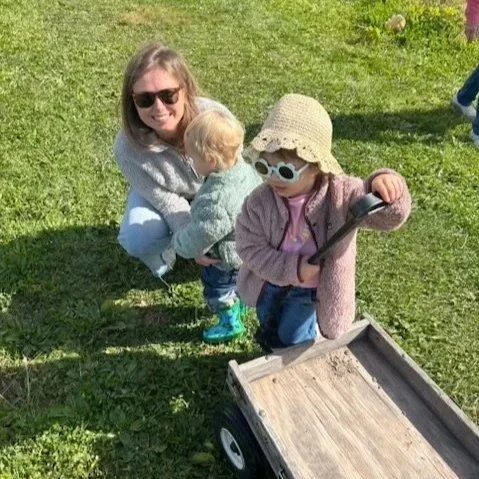
Now, as a parent of 2 toddlers, my resolve has strengthened. There is no time when you’re parenting, yet we expect parents who want any sort of economic stability to navigate the incredibly complex college process while parenting and working. There has to be a better way, and I log into this work every day looking for it.
What does career-connected learning mean to you and why is it important to focus on this?
→ Career-connected learning is transparency. We are asking learners to make an investment of time and money into postsecondary education, but oftentimes that ask comes with a nebulous promise of a job at the other end. Career-connected learning clears the clouds so that students can see a clear pathway to the job they are working towards.
Increasingly, we are recognizing that our learners have busy lives full of responsibilities they are juggling to make college work for them. This is true for adults, but I’d argue also for high school-age students who often are entering college as a working learner or caretaker. In order to make the investment “worth it,” learners need to see what they are working towards, and not just the piece of paper. They need to see what doors the piece of paper will open for them. That information not only motivates students, but empowers them to make informed choices about the programs they choose, their financial commitments, and sacrifices they make.
What is an opportunity or trend that you have seen in postsecondary education that excites you about the future of the landscape?
→ Rural communities are getting much-deserved attention and investment. For a long time, the narrative around rural communities has centered around supporting students leaving their communities to attend prestigious institutions. For the students for whom that’s a great fit, that’s awesome. But not every high school student in a small town desires to leave, and, furthermore, many adults already settled into their communities are not willing to leave for college.
We’re seeing more attention being paid to investing in the workforce development and economies of rural communities, and I’m really excited to see that. I worked in a rural high school in Pennsylvania and spent a lot of time in rural communities in Tennessee, and while rural living isn’t for everyone, for those who do live in a rural place—my family included— it’s not a place to escape from. It’s a place to invest in. Rural community colleges know their communities better than anyone, and—equipped with essential resources—they can provide tremendous opportunity for their students to quickly and efficiently complete a credential and enter or advance in the workforce
When not working, what can people find you doing?
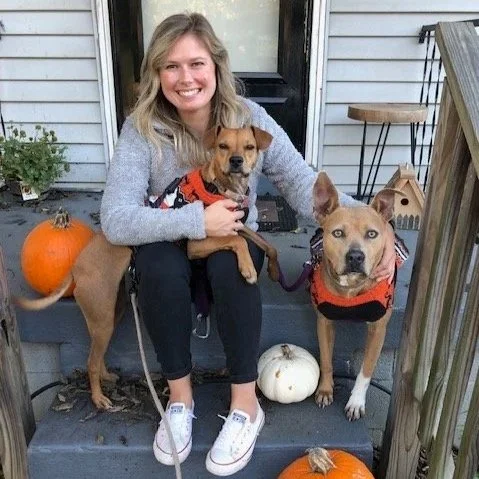
→ I’m hanging with my kids and my husband, either in the backyard with our two dogs, or en route to grab a coffee and visit the playground.