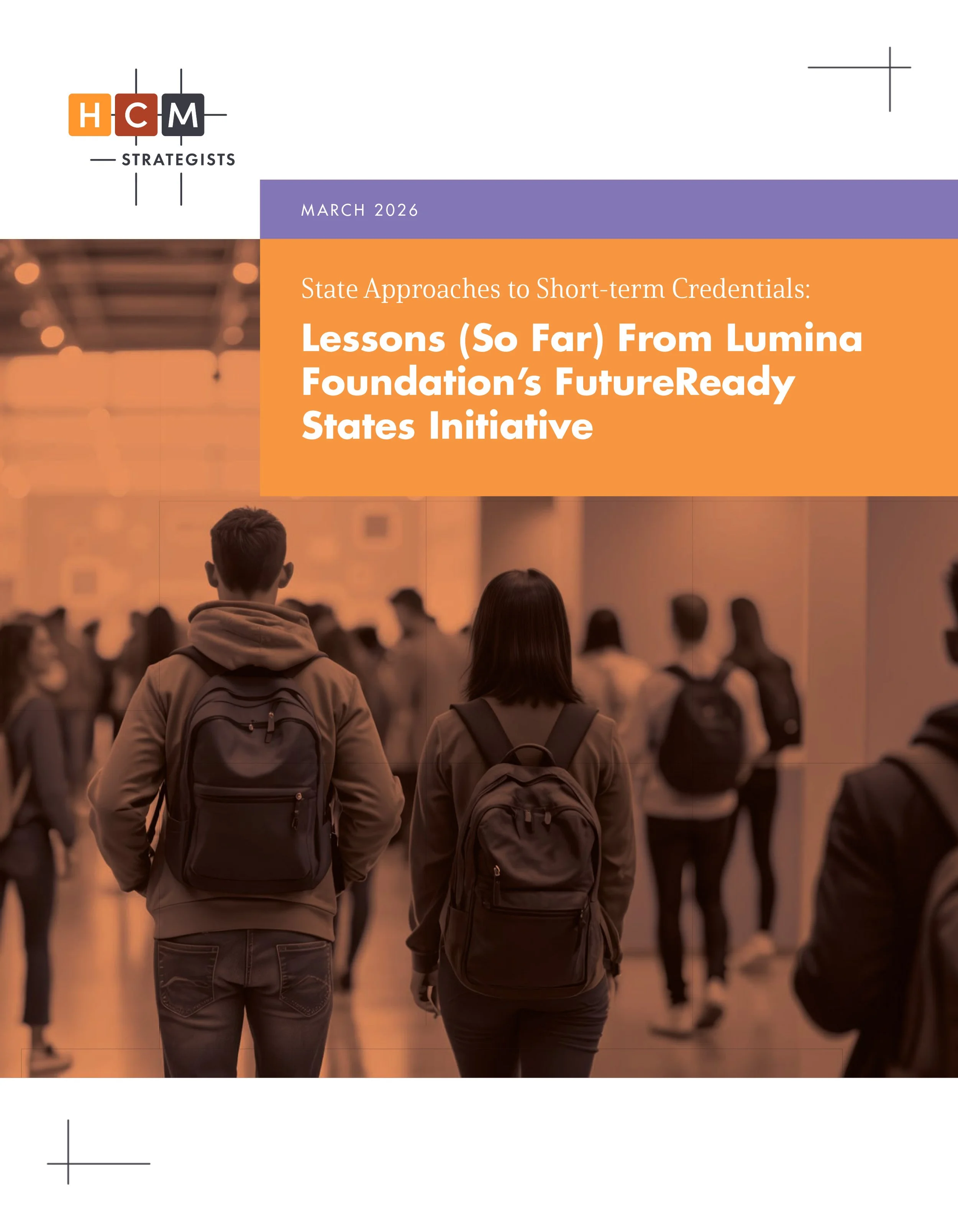
We have released our latest paper,“Lessons (So Far) From Lumina Foundation’s FutureReady States Initiative,” detailing cross-cutting themes, persistent challenges, and emerging opportunities from the cohort of states taking coordinated action to strengthen their short-term credential ecosystems.
About the Paper
This paper assesses the 12 participating FutureReady States on their ability to strengthen short-term credential programs to improve access, employment, and economic mobility for learners.
Across all participating states, key challenges included fragmented governance, data gaps and limited interoperability, inconsistent definitions of quality and value, uneven employer engagement, and the sustainability of funding.
Despite these challenges, significant progress has been made. Nearly all FutureReady States now recognize short-term credentials as a formal component of their postsecondary and workforce ecosystems. Many states are also developing cross-sector collaboration, gaining momentum in modernizing their data systems, and investing substantial resources into short-term credentials.
In the next stage, HCM recommends five interdependent strategic imperatives that will further progress and reinforce success:
Work Toward Building Unified Governance and Durable Infrastructure
Align Funding with Quality and Value
Enhance Data Systems for Decision-making
Institutionalize Quality Assurance
Strengthen Employer Engagement Beyond Design
About FutureReady States
As short-term credentials grow in popularity, states are stepping up to ensure they deliver real value. The Lumina Foundation’s FutureReady States Initiative, in partnership with HCM Strategists, supports 12 states in aligning education and workforce systems to identify, improve, and scale credentials of value, helping more adults gain meaningful opportunities in a fast-changing economy.