New HCM research offers a comprehensive look at how states approach college affordability—and a framework for building more coherent affordability systems.
College affordability remains one of the most pressing challenges facing students, families, and policymakers. States have responded with a wide range of policies and programs, from financial aid and tuition-setting policies to strategies that help students complete their degrees more efficiently. But with so many approaches in play, it can be difficult to see the bigger picture: How do these strategies fit together, and are they advancing a state's broader higher education goals?
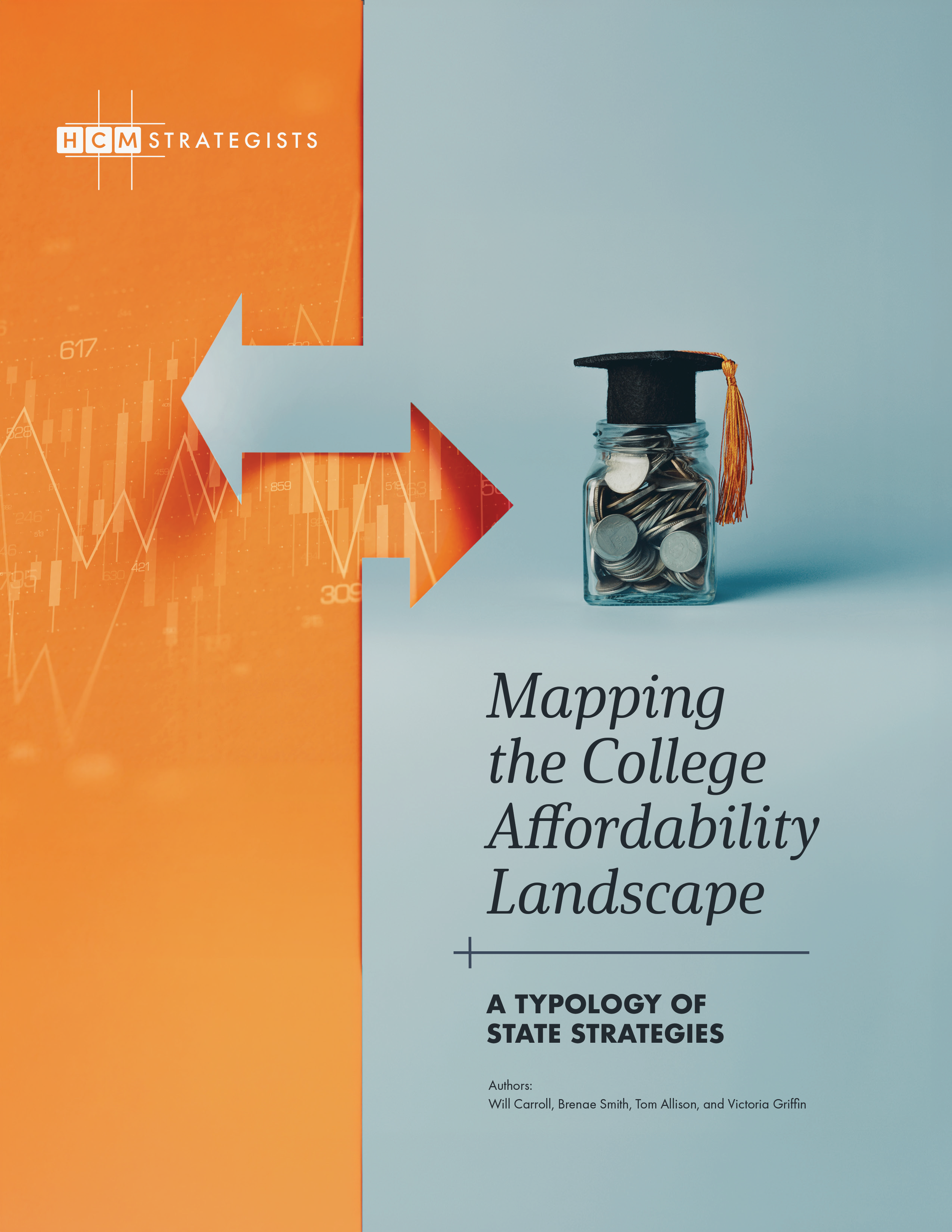
HCM Strategists is pleased to announce the release of Mapping the College Affordability Landscape: A Typology of State Strategies, a new report that offers a comprehensive framework for understanding how states approach college affordability.
Drawing on a national analysis of all 50 states and Washington, DC, the report examines state efforts across four strategy groups:
Financial Benefits: Resources that help students pay for college.
Price-Setting: Approaches that influence what students are charged.
Policy: Broader policies that affect affordability.
Time to Degree: Strategies that help students complete credentials more efficiently.
The typology goes beyond cataloging individual programs. It examines the breadth of strategies states employ and how they target different students and institutions, revealing patterns and differences in the design of state affordability systems.
Click here to access the typology resources including the full typology report, 51 affordability profiles, methodology appendix and data summary tables.