Despite decades of research confirming what works to help students persist and complete their programs, far too many learners—especially those from historically underserved communities—continue to face barriers that hinder their progress. Comprehensive supports, integrated advising, and well-designed academic pathways have demonstrated meaningful impacts on student outcomes, yet these practices remain inconsistently implemented across institutions and systems.
While state policy is widely recognized for its influence on funding and affordability, its potential to shape the environment for student success is not fully realized. States have significant authority to remove systemic obstacles, incentivize institutional change, and ensure that effective supports reach the students who need them most. By aligning policy with proven practices, states can catalyze the adoption and scaling of strategies that enable more learners to thrive.
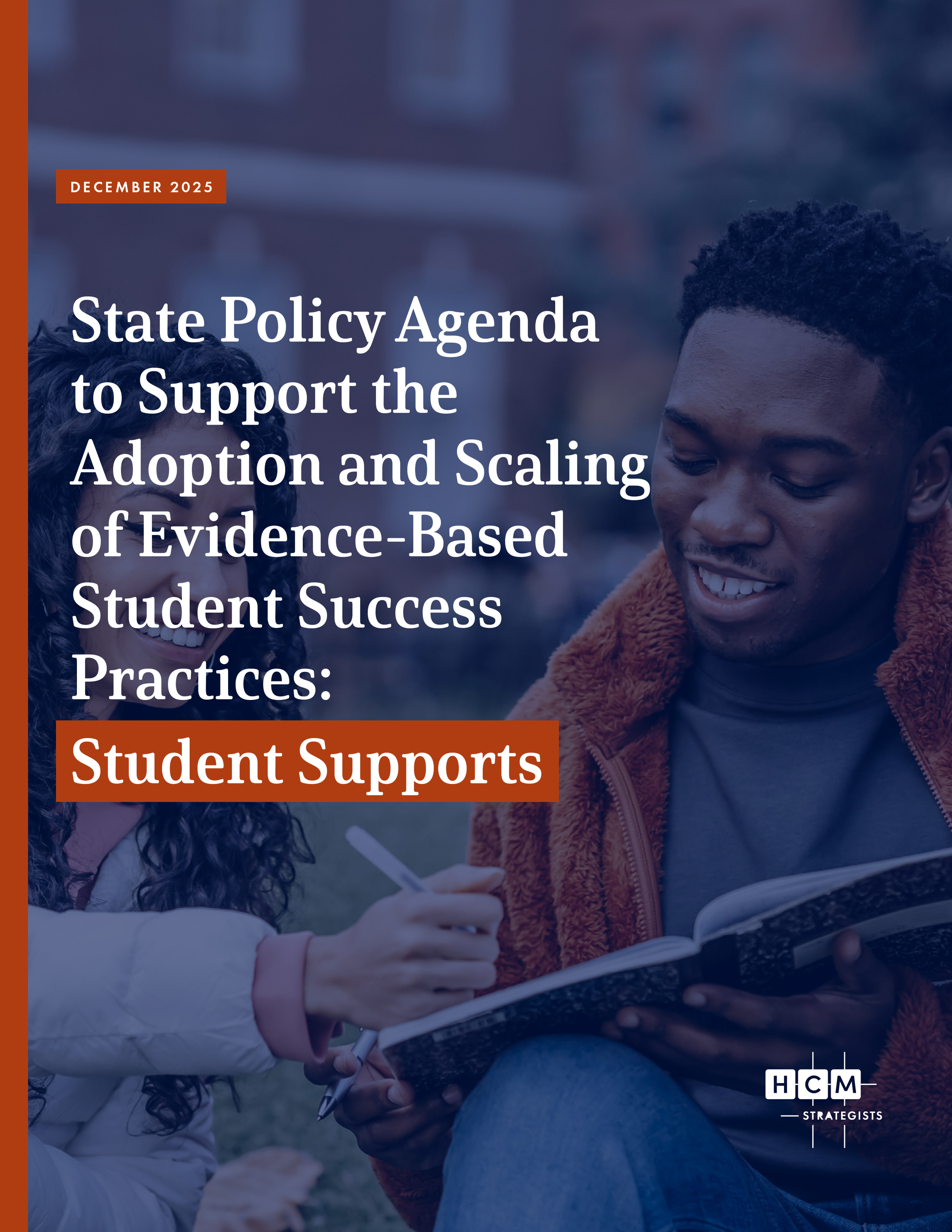
HCM’s new policy series, State Policy Agenda to Support the Adoption and Scaling of Evidence-Based Student Success Practices, explores how state policies can expand and sustain proven strategies that drive college completion and economic mobility.
We are pleased to release the final issue brief in this series, focused on Student Supports, exploring how state policy can strengthen the conditions that support student success. Earlier briefs examined the crucial roles of finance policy and affordability policy. This brief examines the intersection of state policy and the persistent structural barriers faced by today’s students. It addresses a guiding question: How can states design policies that expand student supports, facilitate evidence-based success strategies, and dismantle the obstacles that impede learner progress?
Drawing on an extensive research base and examples from states across the country, the brief outlines actionable opportunities for policymakers to use state-level levers to advance, sustain, and scale student success initiatives. It offers guidance for building policy environments that empower institutions to deliver comprehensive, impactful supports—ultimately helping more students persist, complete their programs, and achieve their goals.
Together, these briefs provide a comprehensive roadmap for state policymakers committed to advancing evidence-based programs and transforming the postsecondary landscape.